
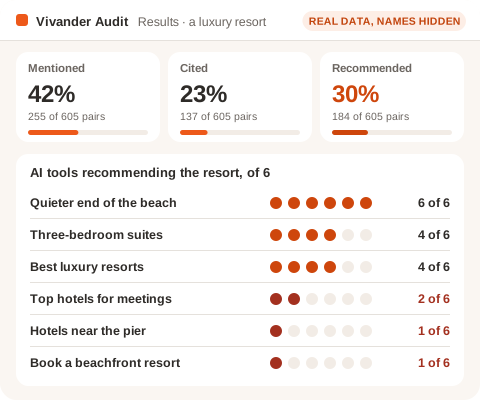
Asked for the quiet end of the beach, 6 of 6 AI tools recommended the resort. Asked a booking question, 1 of 6 named it.
We audited a luxury beachfront resort of about 200 rooms and residences on the Gulf Coast, opened in 2023 under a major international brand.
Its own pages live on the brand's website. That is why every step we recommended says who can make the change: the property or the brand.
Names and the town are left out. The booking question was a question typed into each AI tool; no booking was attempted.
Audits now test seven AI tools, adding Microsoft Copilot. Each example shows the tools tested at the time.
One resort, four kinds of guests, 126 questions
The questions came from the resort's four buyer groups. Each group asks differently, and the audit writes each question the way that group types it.
- Couples and families on a luxury trip
- Couples and planners booking a wedding
- Meeting and association planners
- Spa travelers
Beyond the answers
The audit also read what AI reads about the resort:
- The resort's pages on the brand site and its two restaurant websites
- Its Google listing, and its reviews against eight nearby rivals
- Its travel-agency listings and its booking path
Every fact AI stated was checked against a fact block verified with the property.
Three results for every question
Each answer is read for three results, counted separately. Every recommendation is also a mention. A citation can appear without the name.
Mentioned
The answer names you among the places or firms it lists. AI cannot suggest a business it never brings up.
Cited
The answer links your own website as a source. The tool read your site, so your pages shaped what it said.
Recommended
The answer puts you forward as a choice, with a reason. This is the result that sends a buyer to you.
The resort's results
The first three rows leave the resort's name out. The last row names it, and AI cited the resort's own pages in 76 of 143 pairs (53%).
"Own pages" means the resort's pages on the brand site and its two restaurant websites.
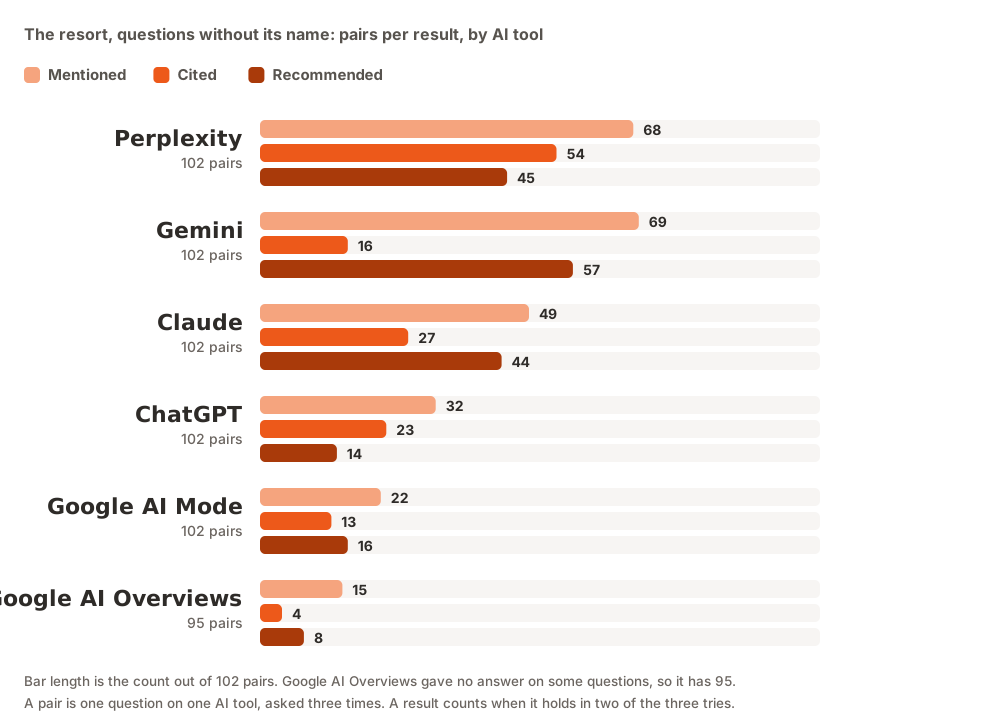
A pair is one question on one AI tool, asked three times. It counts when the result appears in at least two of the three tries.
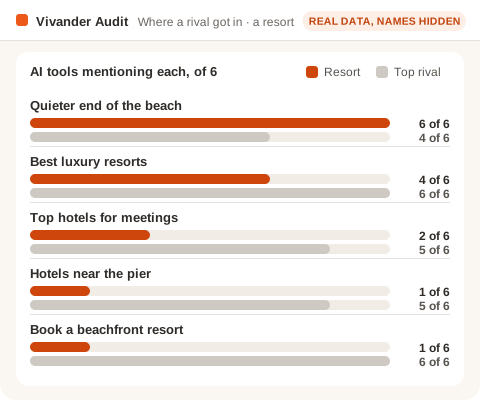
Where a rival took the answer
The rivals were resorts on the same beach, most of them open for years longer.
answers went to a rival
Of 1,819 answers to questions without the resort's name, 910 mentioned a tracked rival and did not recommend the resort.
for the quiet end of the beach
Asked for luxury hotels at the quieter end of the beach, every tool recommended the resort.
on a booking question
Asked "book a beachfront resort" in the town, one tool mentioned it in its answer. A branded full-service resort got 6 of 6.
Results by AI tool
Perplexity and Gemini mentioned the resort in about two of every three pairs. The two Google tools mentioned it in about one in five or fewer.
One question, six tools, three tries each
A couple asks: "Best luxury resorts in [beach town]." Here is what each tool did on September 25, 2026.
| AI tool | Try 1, try 2, try 3 | How the pair counted |
|---|---|---|
| ChatGPT | Nothing Recommended Recommended | Mentioned and recommended. Not cited. |
| Claude | Recommended Recommended Recommended | Mentioned and recommended. Not cited. |
| Perplexity | Recommended + cited Recommended + cited Recommended | Mentioned, recommended and cited |
| Gemini | Recommended Recommended Recommended | Mentioned and recommended. Not cited. |
| Google AI Overviews | Nothing Nothing Nothing | Nothing. Four rivals were listed instead. |
| Google AI Mode | Nothing Nothing Nothing | Nothing. Two rivals were listed instead. |
Result: mentioned by 4 of 6 tools, recommended by 4, cited by 1.
On the next day's repeat, Google AI Overviews mentioned the resort in 3 of 3 tries of this question.
One day is a snapshot. The pattern across 102 questions is the signal.
Where the resort won, and where a rival was there instead
Real questions from the audit, with places replaced. Each count is tools out of six, in at least two of three tries.
| The question | Mentioned | Cited | Recommended | Mentioned instead |
|---|---|---|---|---|
| Luxury hotels at the quieter end of [the beach] | 6 of 6 | 2 of 6 | 6 of 6 | A nearby sister resort (4 of 6), two branded resorts |
| Which resorts on [the beach] have three-bedroom suites? | 6 of 6 | 6 of 6 | 4 of 6 | Rivals on one tool each |
| Best luxury resorts in [beach town] | 4 of 6 | 1 of 6 | 4 of 6 | An established independent resort and its sister resort (6 of 6 each) |
| Top hotels for meetings in [beach town] | 2 of 6 | 1 of 6 | 2 of 6 | A branded full-service resort (5 of 6) |
| Best hotels near [the town's pier] | 1 of 6 | 0 of 6 | 1 of 6 | A resort of another major brand near the pier (5 of 6) |
| Book a beachfront resort in [beach town] | 1 of 6 | 0 of 6 | 1 of 6 | A branded full-service resort (6 of 6), a branded suites resort (5 of 6) |
| Do new luxury hotels in [beach town] have service issues? | 6 of 6 | 3 of 6 | 0 of 6 | Rivals on one tool each. Here a mention is not a win: every tool pointed to this resort as the new hotel. |
Rivals are described by type. The resort won where its identity is clear and documented: its end of the beach and its residences.
It lost on booking questions and where a planner was choosing a meeting hotel.
Five things AI said that were wrong, and where they came from
The audit checked 794 claims against facts verified with the property. Most were right. These wrong ones repeated, and each was traced to its source.
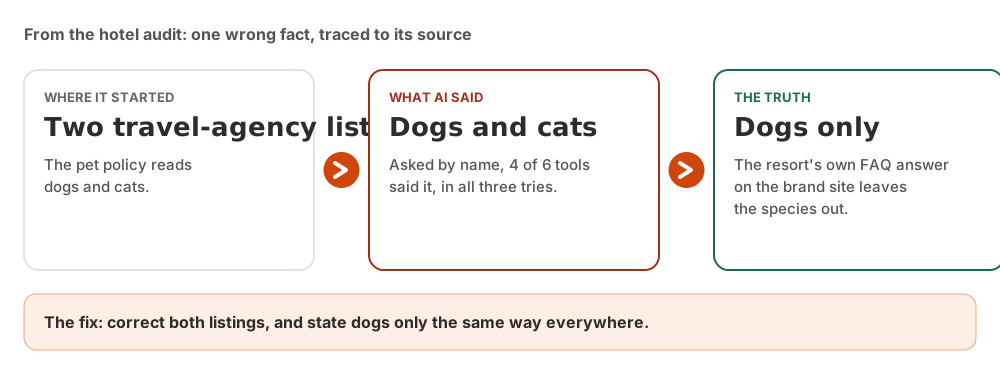
Asked by name, four of six tools said it in all three tries. Source: two travel-agency listings. The resort's own FAQ leaves the species out.
Claude said it in all three tries. The wording sits on the resort's own dining page, in a card for a nearby restaurant styled like its own outlets.
Two tools gave it in all three tries. The resort's own pages on the brand site never state how many rooms it has.
Another tool did the reverse and left the wins out. No page the resort owns keeps wins and nominations apart.
Two tools repeated it. The old number is on the resort's own overview page.
What the audit found on the pages, listings and reviews
Each finding is labeled with who controls it. For a branded hotel, that label decides what happens next.
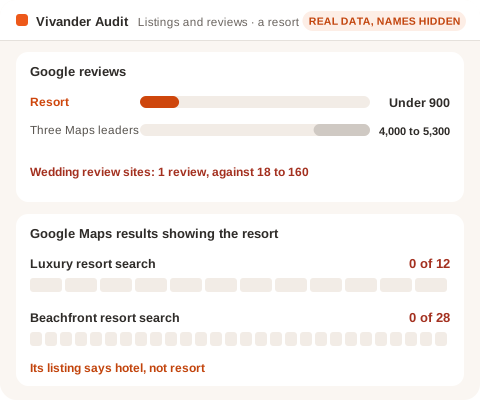
A Google listing that says hotel, not resort
The listing has one category: Hotel. The two resorts leading Google Maps for a luxury resort search carry resort, wedding venue and event venue.
In Maps, the resort appeared in 0 of 12 results for a luxury resort search and 0 of 28 for a beachfront resort search.
A smaller, slower review base
Under 900 Google reviews, against roughly 4,000 to 5,300 for the three rivals leading Maps. Fewer new reviews each month than the rival median.
On the two large wedding-review sites, the resort had one review in total. Four rivals held between 18 and 160 on each.
Restaurant websites that never name the resort
The main restaurant's homepage never names the resort. Neither restaurant site links to it.
That restaurant's website was cited in 0 of 1,836 answers to questions without the resort's name.
Brand pages that are hard for machines to read
The resort's most-cited page refused automated requests from our test environment. Other property pages answered.
How it treats real AI crawlers needs the brand's server logs to confirm.
Hidden details that split the hotel in seven
The hidden business details split the hotel into seven separate entries, with no room count, no rates and no location coordinates.
Seven FAQ questions on the rooms page have a single dash for an answer.
A booking path that forgets the guest
The most-cited page opens its booking widget at tonight, one room, one adult. A couple with a date needs 8 clicks on a computer or 10 taps on a phone to see rates.
No tested path, for a room, a wedding inquiry or the spa, carries the guest's dates or party size into the booking engine.
What the resort was asked to do first
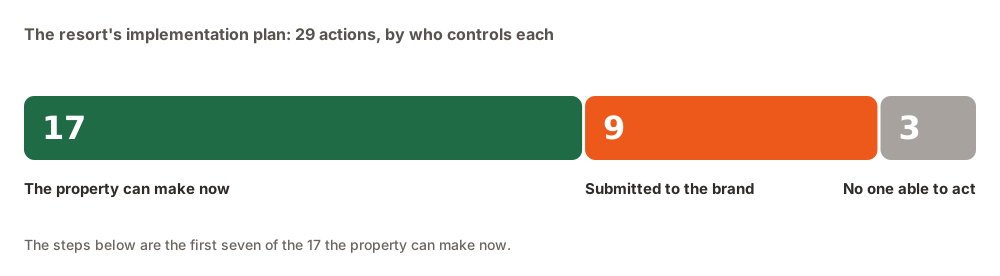
The implementation plan holds 29 actions. The first seven are all within the property's reach.
Add the resort, wedding venue, event venue and spa categories to the Google listing
Categories decide which searches the listing can appear for. The plan asks for the accurate ones and promises no change in ranking.
Who controls it: The property, or the brand if a brand listings program holds the manager seat
Ask every departing guest for a Google review, and reply within 48 hours
No incentive and no screening. The resort has under 900 Google reviews; the rivals leading Maps have roughly 4,000 to 5,300.
Who controls it: The property
Complete the Tripadvisor listing
Add the total room count and the opening date to a description that already gives the room split. Keep photos current and replies steady.
Who controls it: The property
Correct the pet policy on the two travel-agency listings
Dogs only, stated the same way everywhere. Remove a free-breakfast claim from two other listings.
Who controls it: The property; the travel-agency feed may pass through the brand
Publish the verified facts no owned page states
Total rooms, award wins kept apart from nominations, a magazine readers' ranking and the opening date.
Put them on the restaurant sites, in press and on the listings the property runs.
Who controls it: The property, plus a request to the brand for its pages
Fix the main restaurant's homepage
Remove the pop-up that covers the Reserve button on load, settle one set of dinner hours, and repair the reservation and phone links.
Who controls it: The property, with its web vendor
Tie both restaurant websites to the resort
Name the resort on each site and link both ways, so AI can connect the restaurants to the hotel they belong to.
Who controls it: The property
Filed with the brand
The brand-side changes went into a written specification the property can file.
- One hotel entry in the hidden business details, with rooms, rates and locationBrand
- Pages that AI crawlers can readBrand
- A booking widget that keeps the guest's datesBrand
What the resort received
A branded hotel gets the same measurement as an independent one. The difference shows in the plan, where every action says who can make it.
Five documents
An executive summary, a full assessment with every finding and its evidence, a 29-action implementation plan, a playbook, and a retest document.
A shorter pair for busy readers
A condensed executive summary and a visibility review, for the owners and managers who will not read the full set.
What AI knows about the resort
Every branded answer read against the verified facts. Each wrong answer is quoted and traced to its likely source.
A specification for the brand
The brand-side changes in writing: the hotel entry, readable pages for AI crawlers, and a booking widget that keeps the guest's dates.
30-day tests
Six test sprints, each with one change, a control, a 30-day read and a success rule written down first. Plus a 90-day brand track.
A baseline on the platform
All 126 questions and 2,268 answers loaded into Vivander Visibility, so every later measurement compares against this one. Viewing it there comes with a monitoring plan.
Questions about these results
We operate under a brand. Does the audit still apply?
Yes. The measurement is identical, so the results compare with an independent hotel's.
What changes is the plan. Each action is labeled property, brand or neither. The property works its own list while it files the brand requests.
Is recommended an exact count?
Recommended is a judgment about what an answer does, and a second reader did not always agree with the first. Read it as a direction.
Mentioned and cited rest on the saved answer text and a link test. They are the firmer numbers.
Why does one question look different the next day?
AI answers change from try to try and day to day. That is why every question is asked three times.
It is also why the audit reports patterns across all 102 questions rather than any single answer.
Did the fixes work?
This page shows the findings and the plan, not results after the fixes.
We add outcomes to an example only when a retest has measured them.
Will my results look like these?
Your questions come from your guests, your market and your competitors, so your numbers will be your own.
The format is the same: the three results, the tools, the questions you win and lose, the facts AI gets wrong, and the fixes in order with who controls each.
See how your hotel shows up when guests leave your name out.
An audit tests your guests' questions on the AI tools they use and shows which rivals appear in your place.