
Seven AI platforms, tested in depth
Every question runs on the seven platforms the audit scores. Microsoft Copilot joined the scored set in October 2026.
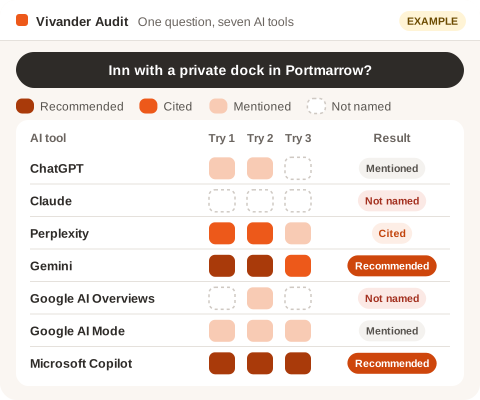
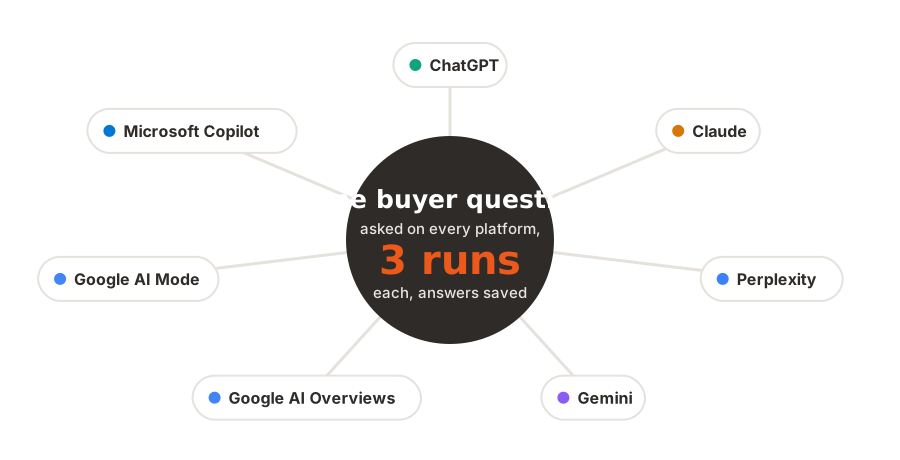
Every question, on every platform, three times
We read ChatGPT and Gemini the way a buyer sees them, on their public websites. Ongoing monitoring reads them the same way, so the two line up.
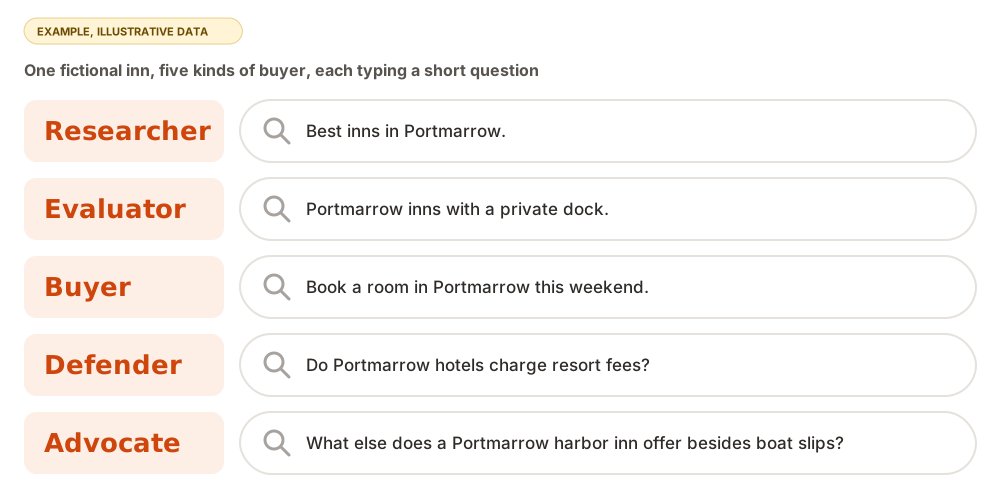
Unbranded questions per buyer type
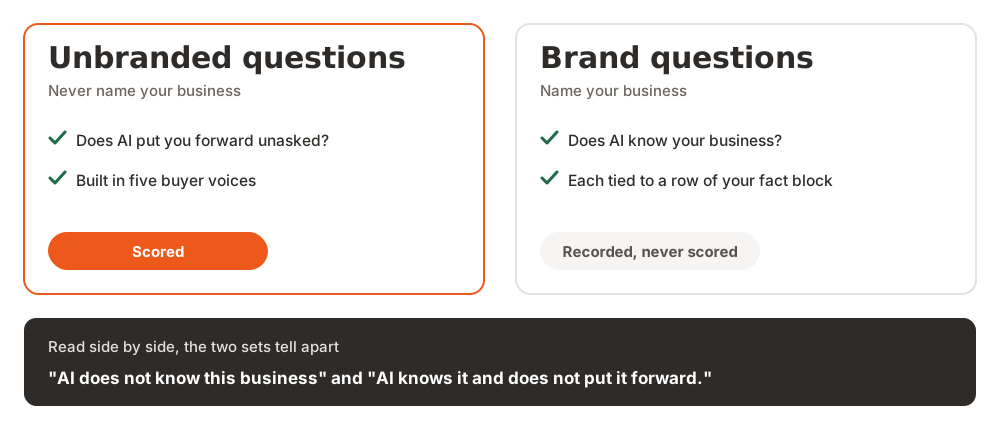
Questions that never name you, built for each buyer type from intake.
With more than three buyer types, the first audit caps the total at 150 and rotates the rest into later retests.
At least eight questions each
The researcher, the evaluator, the buyer, the defender doing due diligence, and the advocate who has already bought.
Of every question, on every platform
One question on one platform, asked three times, is a pair. A result counts when it holds in two of the three tries.
Brand questions, recorded
Questions that name you, across ten kinds of fact from your fact block. They are reported and never scored.
Why three? An AI answer is probabilistic. One answer is one sample, and it may not be the usual answer.
In testing, three asks on one day disagreed on naming the business in about 1 in 7 pairs, and in 1 in 3 where it was named at all.
Three tries show whether a result is settled (three of three) or contested (two of three). One try cannot.
Questions written the way buyers type them
Buyers type short questions, so the audit asks short questions.
- At least 35 percent of the unbranded questions are eight words or fewer.
- The middle question runs six to twelve words, and none runs past twenty-two.
- A question about a place names the place, because an AI tool cannot know where "near me" is.
- Every word is checked against your site or your buyer's vocabulary.
Competitive questions, written open
At least ten competitive questions leave room for you in the answer, such as "alternatives to Quayside Hotel in Portmarrow."
A question that fixes the answer to two named rivals is recorded and not counted for or against you.
How buyers ask, and how AI searches
Buyers also write long questions about their own situation. A separate set asks questions worded that way, and saves the web searches each AI tool runs to answer them.
In testing, the AI's searches ran about 8 words against 32 in the buyer's question. More than a third added a ranking word such as "best," and many added a year.
We run each of those searches on Google to see whether your business comes back. This set is recorded and compared with the scored set, never scored.
Brand questions are kept apart from the score
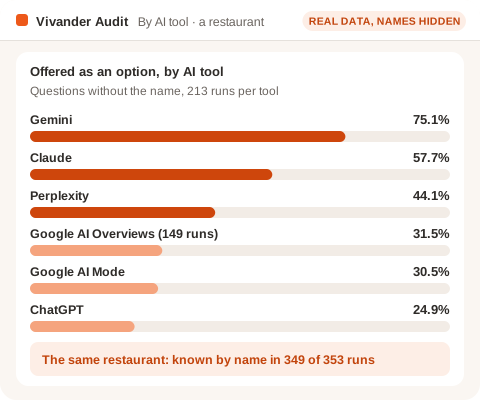
The score asks one thing: does AI put you forward to a buyer who did not ask for you?
Why brand questions stay out
A question that names you is easy to appear in. Counting it would inflate every rate.
Multi-part requests
At least twelve requests, each with three or more hard requirements, such as a date, a place and a facility you offer.
They record which requirements AI drops and who it names instead. Recorded, never scored.
Sampling, stated plainly
Three runs per question is below the published recommended minimum of seven to eight repetitions (Schulte et al., 2026).
Every document says so, and every stability figure is reported against the runs taken.
How a result is classed: mentioned, cited, recommended
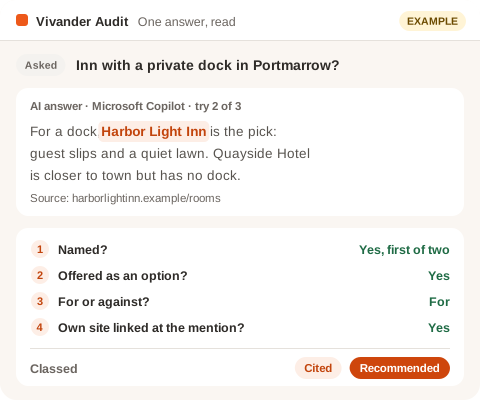
Every answer goes through the same four questions, in order, from a written and versioned rubric.
Does the answer name you, by any way your name is written? If not, you are not in the answer.
Are you offered as an option, rather than used as a landmark or a comparison?
If the answer advises against you, it goes to the reputation review.
The answer is classed, with your position in any list and the sources it cited.
A reader's impression never assigns the result.
Not named, or named only as a landmark or a comparison.
The answer offers your business as an option for the person asking.
The answer links your own website at your mention. Decided by where the link sits, not by a reader.
The answer puts your business forward as a pick for the person asking. Not applied to brand questions.
Every result is read twice before it counts
Three checks stand between a saved answer and a printed number.
A second reading
A different model reads every answer again and records its confidence. One agreement figure is printed in the documents.
Hand review
Where the two readings disagree on a line that changes a score, or confidence is low, the row is ruled by hand before scoring.
An outside AI reader
An AI from a different model family reads the summary and assessment cold. Every headline or material challenge is fixed or answered with a saved capture.
Find out where you stand in AI answers, and what to fix first.
We can help you identify the gaps and put them in order, starting with the ones your team controls.