
What gets checked, step by step
The audit runs in ten stages, numbered 0 to 9. Every step has an id, such as 2.1 or 4.2, that shows where it sits in the order.
Each step leaves a saved record. The next step does not start until that record exists.
Ten stages, from intake to the close
The steps in the order they run, with what each one examines and why it matters to you.

First, your buyers and your facts
Before anything is measured, we agree on who your buyers are and what is true about your business.
Stage 0 Setup
- 0.1
Intake, the fact block and the name check
- Who buys from you, what they buy, your goals and your most valuable revenue segments.
- The competitors you measure yourself against.
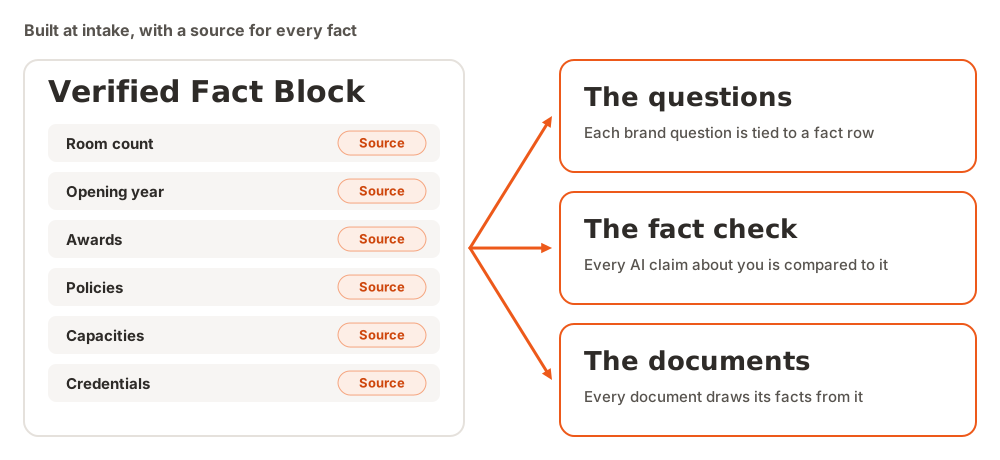
- A Verified Fact Block: room count, opening year, awards, policies, capacities and credentials, each with its source.
- Under a brand, franchise or management company: who controls your pages, place records, reviews, social profiles, directories, booking path and press.
- Whether your name is shared with a place, a person or a common word.
Why it matters. Every document draws its facts from this block, so nothing is stated from memory. The name check stops a namesake from being counted as you.
- 0.2
Business baseline
What we examine. Your business in its own terms before any measurement: what you sell, where, to whom, and through which channels.
Why it matters. A mid-market inn is then tested with a mid-market buyer's words, never a luxury buyer's.
Stage 1 The questions
The questions are the instrument. If they are wrong, every number after them is wrong.
- 1.1
The questions your buyers ask
- Unbranded questions in five buyer voices, and open competitive questions.
- A separate set of brand questions tied to the fact block.
- A set of multi-part requests, and a shortlist grid for your three most valuable segments.
- Every word checked against your site or your buyer's language. The AI testing page gives the exact minimums.
Why it matters. A question that sounds right to an auditor and wrong to your buyer measures nothing. Tying each one to a source keeps the test about your market.
Your website: can AI reach it, read it and act on it?
Six steps check whether AI systems and AI agents can use your site.
Stage 2 Your website
- 2.1
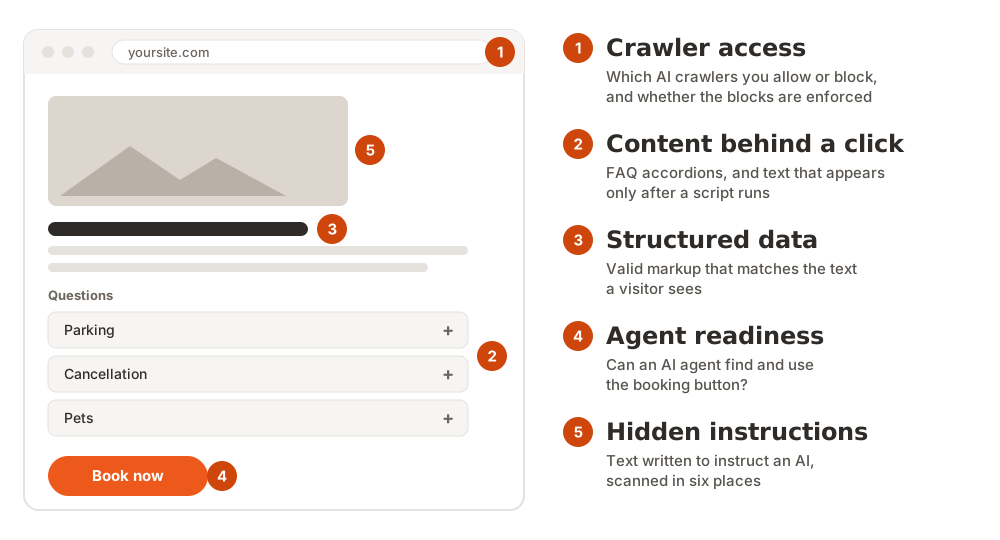
Crawl, crawler access and the prompt-injection scan
- Every page in your sitemap against the pages that actually load.
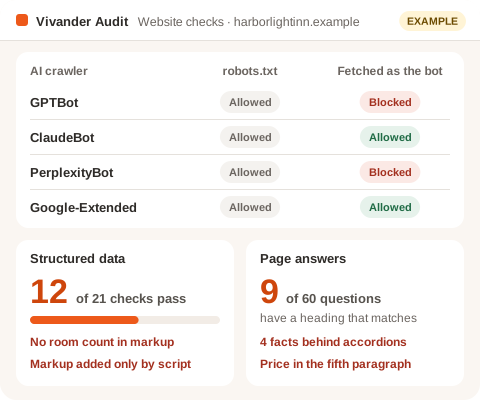
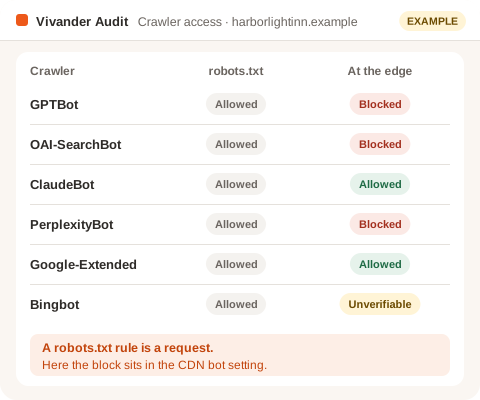
- Your robots.txt: which AI crawlers you allow or block, on purpose or by accident, and whether the blocks are enforced.
- Content that appears only after a click or a script, such as FAQ accordions.
- Internal linking depth, and the structured data on bookable inventory.
- Text written to instruct an AI, on your site and your named competitors' sites.
That scan covers six hiding places: visible text, hidden elements, HTML comments, structured data, files such as llms.txt, and content served only to crawlers.
Why it matters. AI cannot quote a page it cannot reach. Hidden instructions are a trust and security risk, whether a vendor or an attacker placed them.
- 2.2
Technical foundation
What we examine. Response codes, canonical tags, indexation on Google and Bing, page speed, mobile readiness and structured data validity.
We also check that your markup matches the text a visitor sees, and that facts such as a rate or a capacity are in visible text.
Why it matters. This is Layer 1, the gate. Structured data is scored for rich results and for helping systems recognize your business.
- 2.3
Agent readiness
What we examine. Every place an AI agent would act for a customer, such as booking, checking availability, requesting a quote or filling a lead form.
For bookable inventory, we also record whether you take part in the commerce programs that let an assistant complete a booking.
Why it matters. Assistants that act for a buyer are new. A gap here is recorded as a positioning opportunity, outside the score.
- 2.4
How agents perceive your pages
What we examine. Your home page and top conversion pages as an agent reads them, in seven categories:
- Real buttons and links, heading order, page landmarks and form labels.
- Correct accessibility markup, and passages that can be quoted.
- Visual legibility, such as a booking button that is too small or covered by another element.
Why it matters. Google's guidance describes agents reading a page three ways: screenshots, HTML and the accessibility tree.
A booking button an agent cannot find is a lost booking.
- 2.5
Photography and visuals
- An inventory of your images, with sampled scoring on five criteria.
- A test of whether a vision model can describe what each image shows.
- A comparison with competitors' visuals, and a reverse-image check of where your photographs appear.
Why it matters. A system describing your property can only say what your images and their text make clear. Every recommendation carries an effort and a cost.
- 2.6
The page set
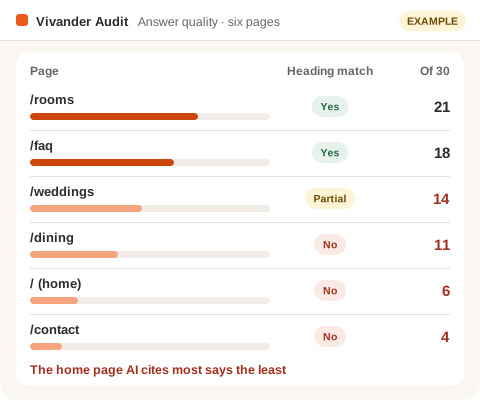
What we examine. Up to twenty pages to score for answer quality, chosen by structure and by the related questions AI systems search behind a buyer's question.
The set is completed once the AI testing shows which pages were cited.
Why it matters. The pages scored are the ones that bear on the answers, rather than a random sample.
Collection: the AI runs, and what other sites say about you
The AI testing runs here, beside a full sweep of the sites that describe you and your competitors.
Stage 3 Collection: the AI runs and everything off your site
- 3.1
Your entity and every way your name is written
What we examine. Whether your profiles point to each other, and whether a Google knowledge panel exists, is claimed and is accurate.
We trace any wrong claim in it to its source, and list every spelling and short form of your name.
Why it matters. Every AI answer is matched to you through that list of names. A wrong claim with a traceable source, such as an old menu file, is a fix you can make.
- 3.2
The AI test runs
What we examine. Every question on all seven AI platforms, three runs each, with the full answer and every cited source saved.
A separate set of long questions, in a buyer's own words, records the searches each AI tool ran, and whether your business comes back on them. Recorded, never scored.
Why it matters. This is the evidence behind Layer 4 and every statement about what AI says. The AI testing page explains it in full.
- 3.3
Citation resolution
What we examine. Gemini cites its sources through redirect links that expire within days. We resolve every one to the real page as soon as the runs finish.
Why it matters. Without this step, the sources behind Gemini's answers about you would be lost.
- 3.4
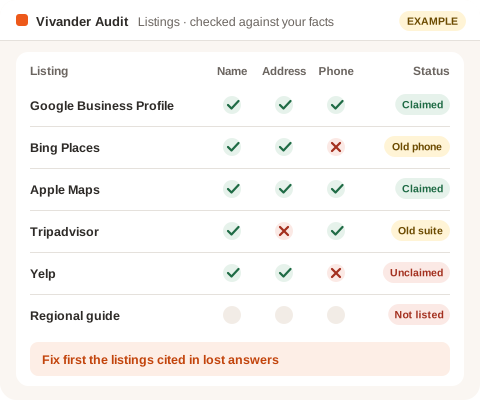
Place records
What we examine. Your Google Business Profile, Bing Places and Apple Maps records: whether each exists and is accurate, with its categories, attributes and links.
We also read owner replies to reviews. On local results we save the whole list returned, never the top three alone.
Why it matters. Place records feed map results and local AI answers. Reading only the top of a list can report a business as absent when it sits further down.
- 3.5
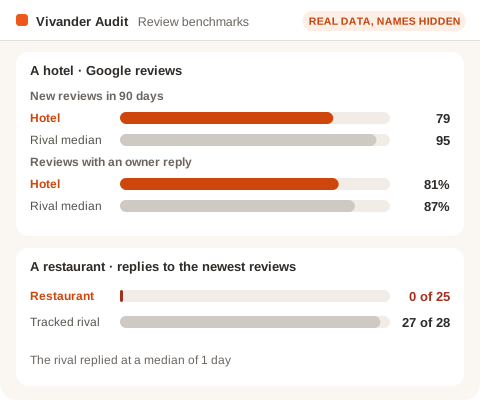
Review benchmarks
What we examine. Review volume, rating, recency and owner-response rate on the four review sites that matter most in your category.
We measure you and three to five named competitors, against the competitors' median.
Why it matters. "Respond to more reviews" is advice. A gap against your competitors' median is a measurement you can act on and track.
- 3.6
Off-site sources
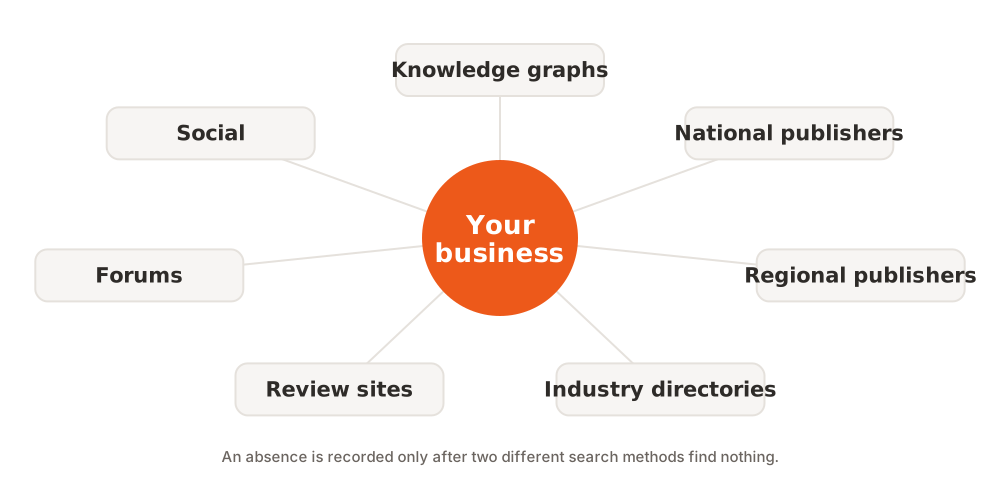
What we examine. Third-party sources about you in the seven categories in the picture above. An absence is recorded only after two different search methods find nothing.
Why it matters. This is the evidence other sites hold about you. It feeds Layer 3 and the Source Authority reading on the platform.
- 3.7
Named directories
What we examine. Every credible directory for your type of business, checked by name.
Why it matters. You receive a list of the specific directories to claim or correct, rather than a general instruction to "improve listings."
- 3.8
Directory census
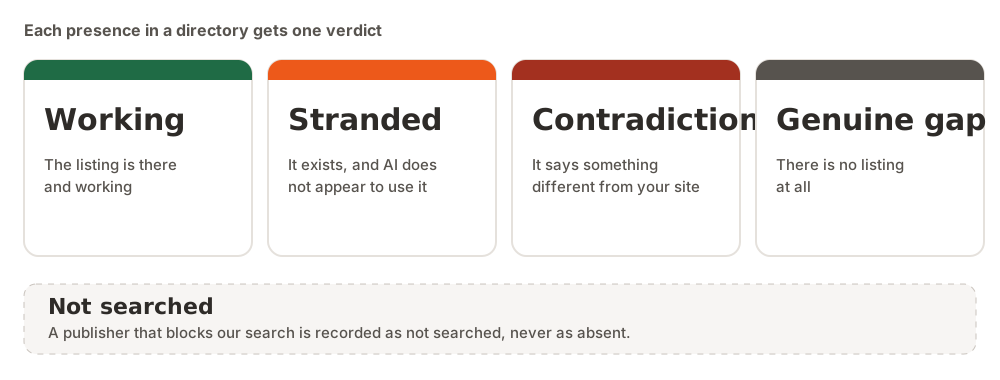
What we examine. Each presence gets one of four verdicts: working, stranded, contradiction or a genuine gap. The picture below shows what each means.
Why it matters. A stranded listing and a missing listing need different fixes. The census tells them apart.
- 3.9
Where your competitors appear
What we examine. The same off-site sweep, run for the competitors you named.
Why it matters. It shows the sites where your competitors are present and you are not. That is where the plan sends your effort.
- 3.10
Bridge entities
What we examine. Five to ten landmarks, venues, events, institutions, certifications or buyer needs that connect you to how buyers search.
For each, we check whether your site states it with specific detail and whether other sites confirm it.
Why it matters. "Near the harbor" helps only when your pages say how near, and other sources say it too.
- 3.11
Social corroboration
What we examine. Ten social surfaces, weighted by how much someone other than you vouches for you.
A forum thread written by guests counts for more than a brand page with a larger following.
Why it matters. The question is whether an AI system has independent material to reach for. Follower counts do not answer it.
- 3.12
Retail AI surfaces
What we examine. Only when you sell through retail or marketplaces: your branded results page, page-one presence on category searches, and review depth against the incumbents.
Why it matters. For a product business, the marketplace is often where a buyer's question ends.
- 3.13
Paid AI surfaces
What we examine. Who holds sponsored placement on searches for your name and your three most valuable category searches.
We also record any disclosed ad shown beside a captured AI answer.
Why it matters. A competitor buying your name is a cost you may not see. Where our method cannot see ad slots, the document says so rather than reporting zero.
- 3.14
Off-site depth
- Citations per platform.
- A league table of your website against each competitor's website as an AI source.
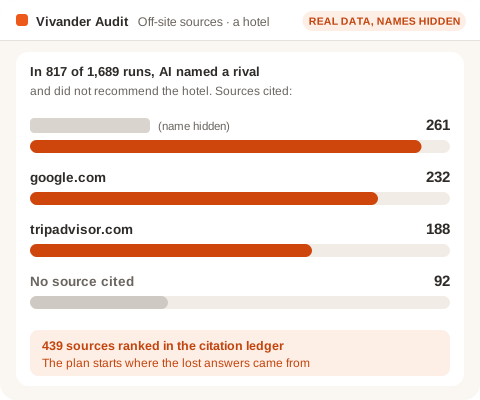
- The most-cited third-party sites where you are absent.
Why it matters. It names the specific sites that shape answers in your market, and where you are missing from them.
Judgment, verification and scoring
Every answer is classified, every fact is checked, and the booking path is walked.
Stage 4 Judgment
- 4.1
Classifying every answer
What we examine. Each saved answer is classed as mentioned, cited, recommended, or not offering you, by a written four-question rubric.
The AI testing page explains the four questions.
Why it matters. The same rubric on every answer, platform and retest means a change in your numbers is a change in the answers.
- 4.2
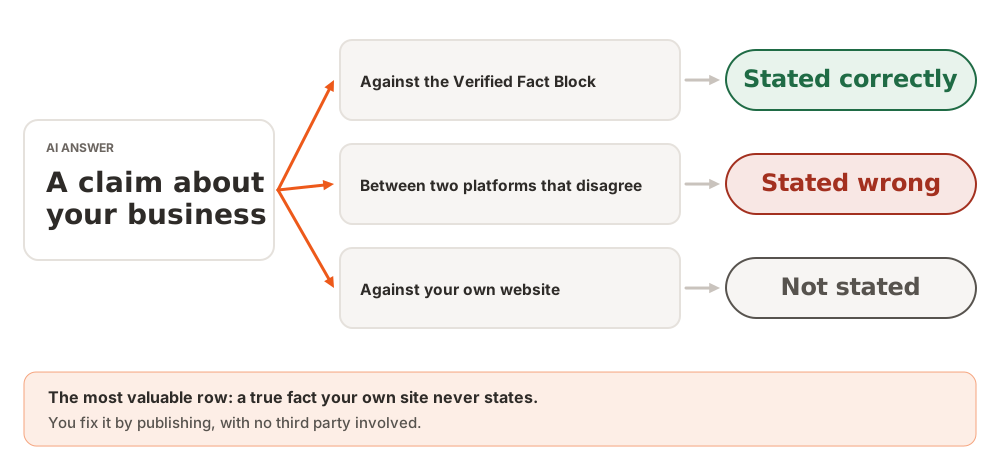
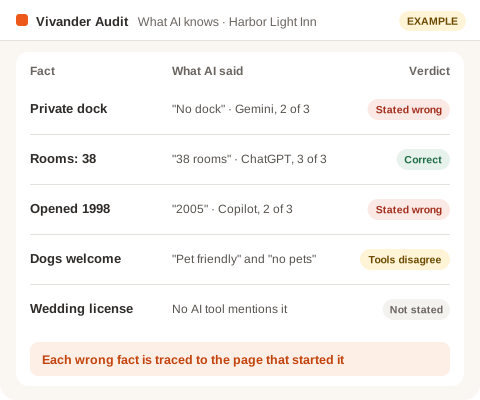
What AI knows about your business
What we examine. Every claim AI made about you, compared three ways and judged stated correctly, stated wrong, or not stated.
Why it matters. The most valuable row is a true fact your own site never states. You fix it by publishing, with no third party involved.
This report is recorded and never scored, since scoring accuracy would reward a business AI never mentions.
- 4.3
Reputation sources
What we examine. Negative sources about your business: which ones AI cites, whether they rank on Google, how old they are, and whether the issue is still true.
Each issue is marked still true, resolved or never true.
Why it matters. A resolved issue that AI still cites is a correctable problem. A cited source off Google's first page sits outside the reach of ordinary search reputation work.
An accurate current fact gets one line and no advice to hide it.
- 4.4
Content scoring
What we examine. Each page in the set against six answer-quality signals:
- It cites sources, carries quotations and carries numbers.
- It states specifics instead of hedging, and compares options.
- It puts essential facts, such as price, in visible text.
We also record whether AI actually retrieved the page.
Why it matters. Only pages AI retrieves get content recommendations. A page AI never reaches gets a retrieval fix first.
- 4.5
The booking journey
What we examine. The booking, reservation or inquiry path, walked in a real browser from the links AI cites, on mobile and desktop, to a stated stopping point.
Clicks, pre-filled fields and errors are recorded as they happened.
Why it matters. A buyer AI sends to you can still be lost at the handoff. A path is reported as broken only when the walk reached the step that failed.
- 4.6
Content architecture
What we examine. Up to fifteen of your pages, read by a reviewer who has not seen the question list, to record what question each page answers.
Those are matched against buyer questions: a match, drift, a question with no page, a page with no question, or two pages competing for one question.
Why it matters. It shows where your site structure works against the questions buyers ask, which a keyword count cannot.
Stage 5 Verification
- 5
Verification before anything is scored
What we examine. Sixteen checks, including:
- A re-run of ten questions on each platform.
- Structured data validated in two separate tools.
- Your name, address and phone confirmed from three sources, and a competitor sanity check.
- Every absence searched directly on the platform concerned.
- A second reading of every classified answer, with contested rows ruled by hand.
Why it matters. An absence inferred from a crawl is not an absence. This stage catches errors before they reach a document.
Stage 6 Scoring
- 6
Scores, the funnel and who took your place
- The Visibility Stack Score and its four layers.
- The Live Visibility Score and its seven components.
- The funnel from asked to mentioned, cited and recommended.
- The competitors named in your place, and the sources behind them.
- Your brand recognition, read beside your unbranded visibility.
Why it matters. It separates "AI does not know this business" from "AI knows it and does not put it forward." Those two findings have opposite fixes.
Documents, the platform and the close
Everything collected reaches you, is checked by readers who did not write it, and becomes your baseline.
Every item mapped to where it is reported.
Built from one data source.
Reviewers who did not write them.
Loaded into the platform.
Stage 7 Documents and independent validation
- 7.1
Coverage manifest
What we examine. Every item collected, mapped to where it will be reported, before any document is built.
Why it matters. Nothing gathered for you is left out of what you receive.
- 7.2
The platform data file
What we examine. The machine-readable record of the audit, validated against the platform's schema and checked against every printed score.
Why it matters. Your dashboard and your documents carry the same numbers.
- 7.3
The documents
What we examine. The client documents, built from one data source with word limits. Every figure is traced to the data that produced it.
Why it matters. A correction lands once and cannot be undone by the next rebuild. The page on what you receive lists each document.
- 7.4
Remediation sprints
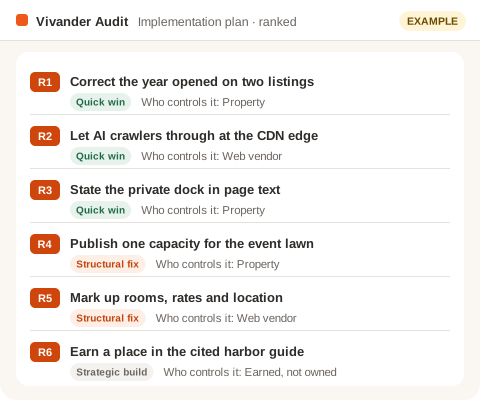
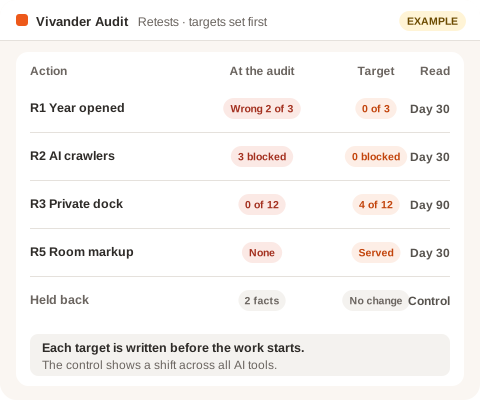
What we examine. The first three sprints, each with a baseline, a change, a control group, a 30-day window and a success criterion set in advance.
Why it matters. The plan can then show whether a change worked, measured against something that did not change.
- 7.5
Walkthrough notes
What we examine. The notes for the session where we take your team through the findings.
Why it matters. The people who will do the work hear the reasoning, not only the list.
- 7.6
Finding codes
What we examine. One code for each finding, the same in every document. Every action is tied to the code of the finding it fixes.
Why it matters. You can follow any recommendation back to the evidence behind it.
- 7.7
Technical register
What we examine. Every technical component the audit checked, itemized with its state.
Why it matters. Your developer or agency gets the full list, with nothing summarized away.
- 7.8
Artifact coverage
What we examine. For every file the audit wrote, whether its content reached you.
Why it matters. Work you paid for cannot sit unused in a folder.
- 7.9
Document structure
What we examine. That each document has the sections it should, within its word limit.
Why it matters. Each document stays short enough to read, and the full depth stays in the data room.
- 7.10
Independent validation
What we examine. Three separate reviewers check the documents, each given our evidence and none of our conclusions.
Then an outside AI from a different model family reads the summary and the assessment cold, and challenges them.
Every headline or material error is fixed, or answered with a saved capture. The response becomes part of the record.
Why it matters. The documents are challenged by a reader who did not write them before they reach you.
Stage 8 The platform
- 8.1
Platform ingest
What we examine. The audit's results loaded into Vivander Visibility as your baseline, then checked in the platform.
Why it matters. Every later week is measured against the audit.
- 8.2
Answer sweep
What we examine. Every answer on the platform checked after loading, including for a namesake counted as you. Each answer naming you is read against your fact block.
Why it matters. The baseline you start from is clean.
Stage 9 Close
- 9.1
Execution review
What we examine. How the run went against the method, step by step, with a verdict on whether it was complete and whether it was accurate.
Why it matters. The audit closes only when the record of how it ran has been reviewed.
- 9.2
Run economics
What we examine. An internal measurement of what the run cost, by step.
Why it matters. It keeps the method affordable to repeat. You do not receive it.
Find out where you stand in AI answers, and what to fix first.
We can help you identify the gaps and put them in order, starting with the ones your team controls.